
At Biochar Life, we’ve always believed that solving global challenges like climate change requires...
Bill Gates’ Shift & Why It Matters for Carbon Removal
A New Strategy for Climate, Innovation, and People
In “Three Tough Truths About Climate,” Bill Gates calls for a major rethink of how we define success in climate action. His essay moves the conversation away from abstract temperature targets and toward innovation, practicality, and human well-being.
1. Accepting a 2–3°C World
Gates acknowledges that staying below 1.5°C is unrealistic given global energy demand and uneven economic development. This realism reframes climate policy: adaptation and resilience must stand alongside mitigation. For the carbon removal sector, this means investing in scalable, verifiable solutions that operate even as emissions continue—bridging today’s gap between ambition and reality.
2. Innovation as the Driver
He argues that technological breakthroughs are the only way to reduce the “Green Premium” and achieve lasting decarbonization. This highlights a key opportunity for the carbon removal industry: to make carbon-negative technologies efficient, affordable, and accessible, especially in agriculture and energy. Innovation can’t just mean new inventions—it also means refining local, low-cost solutions like biochar that combine scientific rigor with community reach.
3. Centering Human Welfare
Gates’ third truth—that improving lives should be the ultimate metric of success—is perhaps the most transformative. It demands climate strategies that directly benefit those most affected by warming: smallholder farmers, low-income workers, and vulnerable communities.
Why It Matters for Carbon Removal
Together, these insights push the carbon removal sector to evolve. Projects must prove not only that carbon is stored, but also that the process enhances livelihoods and resilience. Buyers, developers, and verifiers will increasingly expect solutions that balance environmental integrity with social benefit.
This is precisely where Biochar Life’s work fits in—bridging innovation with inclusion. By turning agricultural residues into biochar, we help smallholder farmers reduce smoke pollution, enrich soils, and create long-term carbon sinks. It’s a grounded, human-centred model that mirrors Gates’ call for innovation, serving people first.
Why Biochar and Smallholder-Led Projects Matter
How does this revised framework apply to your work at Biochar Life? Quite directly. When we look at smallholder-driven biochar production in Southeast Asia (and beyond), we see a convergence of the themes Gates is emphasising:
- Innovation in agriculture: Converting crop residues (corn stalks, husks, coconut shells) into biochar is a technology-innovation front where the Green Premium is already narrowing. Farmers gain soil benefits, and carbon can be removed and stored long-term.
- Human welfare & inclusion: Many of the world’s most vulnerable people are smallholder farmers who face multiple stresses: low income, soil degradation, crop failure, and in some regions, haze and open-burning. A project that reduces smoke, improves yields, and provides income tackles both livelihood and environment.
- Measurable climate benefit: Biochar offers a way to store carbon, reduce pollution, and improve land outcomes. That means mitigation, adaptation, and livelihoods come together.
- Scale through trusted partnerships: As Gates argues, we need solutions that can scale. Smallholder models that deliver trust, transparency, and verifiable outcomes are exactly this kind of model—and they plug into broader carbon markets too.
In short: Biochar Life’s work isn’t just “another climate project.” It sits squarely in the intersection of Gates’ three truths: it involves innovation in agriculture; it supports human welfare; and it is scalable and measurable.
Our Commitment — What We Do at Biochar Life
At Biochar Life, our mission has been grounded in turning agricultural waste into a resource, reducing smoke and pollution, boosting soil health, and delivering verified carbon removal for buyers and communities alike.
By working directly with smallholder farmers, local partners, and regional supply chains, we’re able to:
- Prevent open-burning of residues, cutting smoke and haze.
- Produce and apply biochar, improving soil productivity and drought resistance, while reducing fertiliser dependence.
- Generate high-quality carbon removals under rigorous monitoring, reporting, and verification.
- Create economic benefits for farming communities by returning value from carbon and agricultural improvement.
Our model aligns with Gates’ call for solutions that deliver innovation, impact, and inclusion with credibility—seen in our upcoming Aom Kiln, a new design that makes smallholder biochar production safer, cleaner, and easier to scale.
Looking Ahead — Invitation to Action
As Bill Gates sets the tone for a strategy that blends mitigation, adaptation, welfare, and innovation, we believe Biochar Life is well placed to contribute meaningfully. We are entering a phase of scaling: expanding our partnerships, increasing production capacity, enhancing verification systems, and bringing more smallholder farmers on board.
If you are a buyer, investor, or partner interested in climate-smart agriculture, carbon removal, and community-driven impact, we invite you to explore what biomass-to-biochar can offer. Let’s work together to turn waste into opportunity, pollution into productive land, and risk into reliability.
Learn More
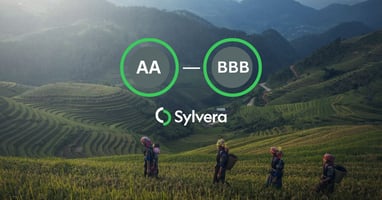
Biochar Life Thailand has received an AA–BBB Estimation Rating from Sylvera. To learn more check out our recent blog post:
https://biochar.life/blog/biochar-life-thailand-receives-aa-bbb-estimation-rating-from-sylvera